The Big Question
Let us ask you something directly.
You are building a new application. You have heard about microservices. Everyone seems to be talking about them. You are tempted to use microservices because they are modern and scalable. But you also know they add complexity. Your project is small right now. You think to yourself: "Should I start with microservices? Or should I keep it simple and build a monolith?"
We hear this question every week from students and professionals who visit our center near Pitampura Metro.
Here is the honest answer: Most projects should start as a monolith. The simplicity of a monolithic architecture allows you to move quickly, test easily, and validate your idea without the overhead of distributed systems. Microservices solve problems that most projects will not have for years—if ever. Choosing microservices prematurely is the architectural equivalent of buying a cargo ship to transport a single suitcase.
Step 3: What Is Monolithic Architecture?
The Simple Definition:
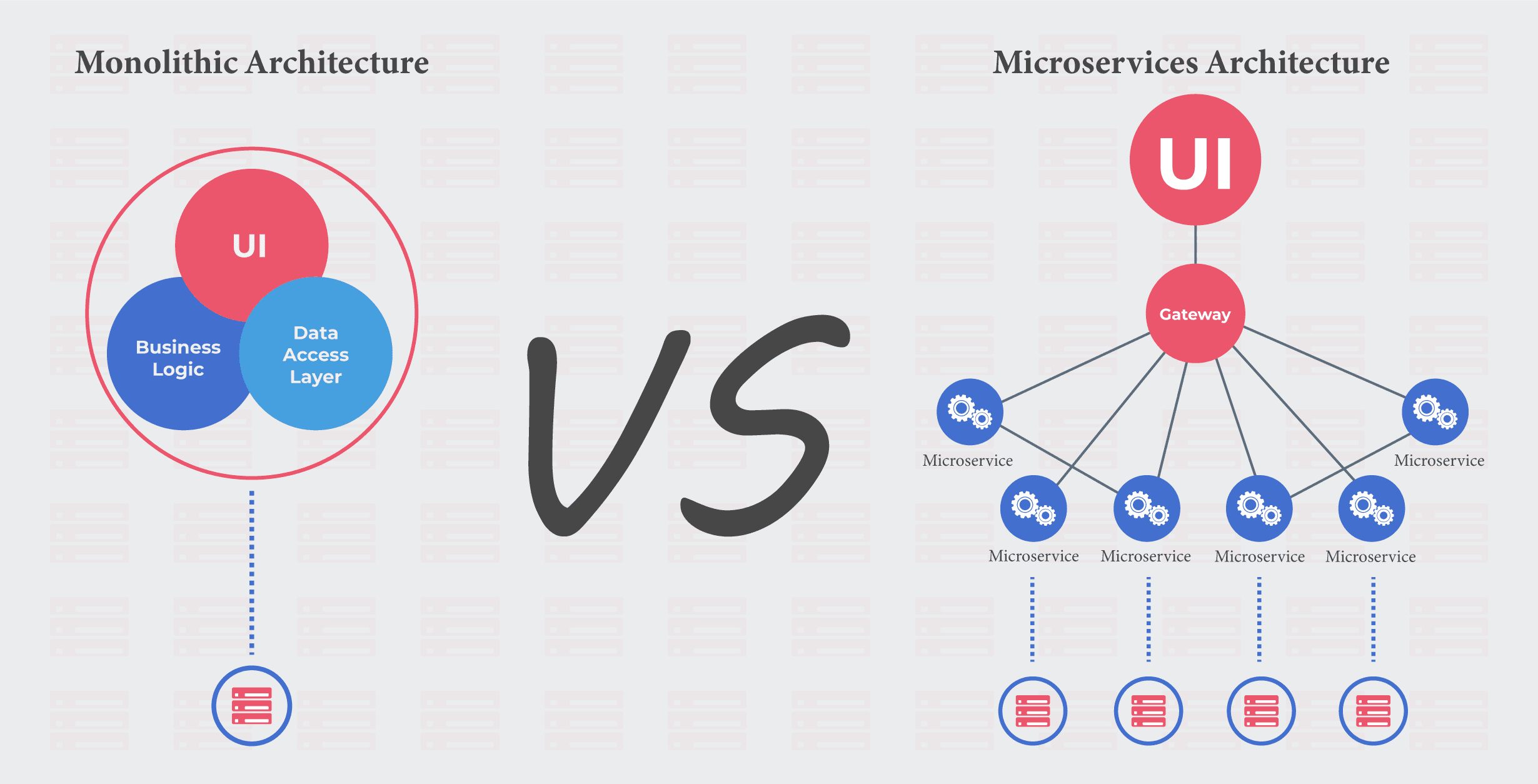
A monolithic architecture is a software design where all components of an application are integrated as a single codebase and deployed as one unit. Everything—user interface, business logic, and database access—runs together on the same server.
The Key Characteristics:
| Characteristic | What It Means |
|---|---|
| Single Codebase | All code in one repository |
| Single Deployable Unit | The entire application is packaged and deployed together |
| Shared Memory | Components communicate through function calls, not network calls |
| Unified Technology Stack | The same language and frameworks across the entire application |
How It Looks:
In a monolithic application, modules are tightly coupled. They run in the same process and share the same memory space. A change to one part of the application often affects the entire system.
Step 4: What Is Microservices Architecture?
The Simple Definition:
Microservices architecture is a design approach where an application is separated into a collection of loosely coupled, independently deployable services. Each service is responsible for a specific business capability, such as user authentication or payment processing, and communicates with other services via lightweight protocols.
The Key Characteristics:
| Characteristic | What It Means |
|---|---|
| Multiple Codebases | Each service has its own codebase |
| Independent Deployment | Each service can be deployed separately |
| Polyglot Technology | Different services can use different languages and frameworks |
| Decentralized Data | Each service can have its own database |
How It Looks:
In microservices, the application is split into independent services that communicate over a network. Each service has its own responsibility and can be developed, deployed, and scaled independently.
Step 5: Monolithic vs Microservices – A Head-to-Head Comparison
| Feature | Monolith | Microservices |
|---|---|---|
| Architecture | Single codebase | Multiple independent services |
| Deployment | One unit | Independent per service |
| Scalability | Limited—you must scale everything together | Flexible—scale individual services |
| Failure Isolation | Low—one bug can affect the entire system | High—failure in one service does not crash the whole system |
| Development Speed | Faster at the start | Slower at the start, faster as the system grows |
| Technology Stack | Uniform | Polyglot—can vary per service |
| Cost | Lower initial cost | Higher initial cost, potentially lower long-term |
| Maintenance | Easier for small apps | Complex but modular |
| Testing | Easier unit testing, end-to-end testing | Requires integration testing and distributed testing |
| Ideal For | Small to medium applications | Large, complex applications with multiple teams |
Step 6: The Pros and Cons of Monolithic Architecture
Pros
| Benefit | Why It Matters |
|---|---|
| Simple to Build and Deploy | Everything is in one place, making development and deployment straightforward |
| Easy Testing and Debugging | Since everything runs in a single process, testing and debugging are simpler |
| Better Performance | Components communicate via function calls, avoiding network latency |
| Transactional Integrity | Local transactions are simpler than distributed transactions |
| Cost-Effective | Lower upfront costs for infrastructure and development |
Cons
| Limitation | What It Means |
|---|---|
| Scalability Challenges | You must scale the entire application, even if only one part needs more resources |
| Hard to Maintain as It Grows | As features are added, the codebase becomes complex and harder to understand |
| Slow Continuous Deployment | Even small changes require redeploying the entire application |
| Team Collaboration Issues | Large teams working on the same monolith face conflicts and slower development |
| Technology Lock-in | You are stuck with the chosen technology stack |
Step 7: The Pros and Cons of Microservices Architecture
Pros
| Benefit | Why It Matters |
|---|---|
| Independent Scalability | You can scale only the services that need it, saving resources |
| Fault Isolation | A failure in one service does not bring down the entire system |
| Independent Deployment | Each service can be deployed on its own schedule, enabling rapid iteration |
| Technology Flexibility | Each service can use the most appropriate programming language and framework |
| Team Autonomy | Small teams can own and operate their own services independently |
| Easier to Maintain | Services are smaller, more focused, and easier to understand |
Cons
| Limitation | What It Means |
|---|---|
| Higher Complexity | Managing multiple services introduces significant operational overhead |
| Network Latency | Inter-service communication over the network adds performance overhead |
| Distributed Transactions | Ensuring data consistency across services is complex |
| Testing Is Harder | Integration testing across multiple services is more difficult |
| Higher Initial Cost | Infrastructure, orchestration, and monitoring require more investment |
| Distributed Complexity | Communication is harder to debug and trace |
Step 8: The Tradeoff – Performance vs Evolvability
The key tradeoff between monolithic and microservices architecture is that between immediate performance and future evolvability.
| Architecture | Performance | Evolvability |
|---|---|---|
| Monolithic | Higher—no network overhead, function calls are fast | Lower—hard to change and evolve as the system grows |
| Microservices | Lower—inter-service communication adds latency | Higher—services can be changed, updated, and replaced independently |
As one researcher put it: "Monolithic architectures usually outperform modular ones in the short run but lead to rigidity because they are hard to change in small increments. Modular architectures make a platform ecosystem more evolvable even though short-term performance will usually be poorer".
Step 9: When to Choose Monolithic Architecture
Choose a Monolith When:
| Scenario | Why |
|---|---|
| Small to Medium Applications | The simplicity of a monolith is ideal for smaller projects |
| Startups or MVPs | You need to move quickly and validate your idea without spending time on distributed complexity |
| Small Teams | A single team can work effectively on a single codebase |
| Simple Transactional Requirements | Local transactions are easier than distributed transactions |
| Predictable Workloads | If your application has steady, predictable traffic, a monolith is simpler |
Step 10: When to Choose Microservices Architecture
Choose Microservices When:
| Scenario | Why |
|---|---|
| Large, Complex Applications | Breaking down a large application into smaller services makes it more manageable |
| Multiple Development Teams | Each team can own and operate its own services independently |
| Variable Workloads | You need to scale different parts of the application independently |
| Frequent Deployments | You need to deploy changes frequently without affecting the entire system |
| Technology Diversity | Different parts of the application benefit from different programming languages and frameworks |
| High Availability Requirements | Fault isolation ensures that a failure in one service does not affect others |
Step 11: The Hybrid Approach – Modular Monolith
A middle ground exists between the two extremes: the modular monolith.
What It Is:
A modular monolith is a single deployable unit with clear boundaries between different parts of the application. Different modules do not know about each other's internals, and they communicate through well-defined interfaces. This approach gives you many of the benefits of microservices without the operational overhead.
Why It Matters:
The modular monolith allows you to:
-
Start with a monolithic architecture
-
Build clear module boundaries
-
Have the option to split into microservices later
According to research, "an optimal, just-right level of modularity is somewhere between the two extremes that strikes a balance between this performance-evolvability tradeoff".
Step 12: The 2026 Perspective – New Trends
In 2026, the architectural conversation has matured. The key insight is that microservices require robust infrastructure and careful orchestration to perform effectively at scale.
Important Findings:
| Finding | Source |
|---|---|
| Monolithic architecture can outperform microservices under moderate loads | 2025 study from Lincoln University |
| Microservices require robust infrastructure to handle peak loads effectively | 2025 study from Lincoln University |
| AI and machine learning are being used to improve the quality of microservices applications | 2025 systematic review |
Step 13: Pro Tips for Choosing Your Architecture
Tip 1: Start with a Monolith
Most projects should start with a monolith. It allows you to move quickly, validate your idea, and avoid unnecessary complexity.
Tip 2: Build Modularly
Even if you build a monolith, structure it modularly. Clear boundaries make it easier to split into microservices later if needed.
Tip 3: Don't Choose Microservices for the Wrong Reasons
Choosing microservices "because everyone else is doing it" is not a good reason. Choose it because you need its specific benefits.
Tip 4: Consider Your Team Structure
Microservices work best when you have multiple teams that can each own and operate a service independently.
Tip 5: Plan for the Operational Overhead
Microservices require strong infrastructure—load balancing, service discovery, monitoring, and distributed tracing. Be prepared for the operational cost.
Step 14: Frequently Asked Questions
Q1: Which is better: monolithic or microservices?
Neither is universally better. Monoliths are simpler and faster for small applications. Microservices are more scalable and flexible for large, complex systems.
Q2: Can a monolith be modular?
Yes. A modular monolith has clear boundaries between different parts of the application, even though it is deployed as a single unit.
Q3: When should I migrate from monolith to microservices?
When the application becomes too large to be effectively managed by a single team, or when you need to scale different parts independently.
Q4: Is microservices always more scalable?
Microservices allow independent scaling of services, but they also require more robust infrastructure. Under moderate load, a monolith can sometimes outperform microservices.
Q5: Are microservices more expensive?
Microservices have higher initial costs due to infrastructure and orchestration requirements. However, they can reduce long-term maintenance costs for large applications.
Step 15: Final Tagline
"Monoliths Get You Started. Microservices Help You Scale. Choose What Fits Your Problem."
Hashtags:
#SoftwareArchitecture #Microservices #Monolithic #SystemDesign #Programming #CodingNow #GurukulOfAI
Step 16: A Note on Your Architecture Journey
Choosing the right architecture is one of the most important decisions in software development. The good news is that it is rarely permanent. A well-structured monolith can be refactored into microservices over time. The key is to start simple, build modularly, and evolve as your application grows.
At Coding Now, we help students build the foundational skills to understand and implement modern software architectures. Come visit us. Take a free demo class. See what is possible.
Your architecture journey starts now.
Contact Us
Phone: +91 9667708830
Email: info@codingnow.in
Website: https://codingnow.in/
Address:
2nd Floor, Kapil Vihar (Opp. Metro Pillar No.354)
Pitampura, New Delhi – 110034
Backlink to main website: Explore Full Stack and System Design courses at Coding Now – Gurukul of AI
