The Big Question
Let me ask you something directly.
You are a data scientist. Or a data analyst. Or a student trying to break into the field.
You spend hours cleaning data. Days building features. Weeks tuning models. You are proud of your craft.
But then you see what AI can do now. You give an LLM a messy CSV file and say "clean this" – and it does. You describe a model in plain English – and AutoML builds it. You ask an AI agent to find insights – and it produces a report in minutes that would have taken you a week.
And you think to yourself: "Is my job disappearing? Should I be worried? What do I need to learn to stay relevant?"
I hear these questions every single week from data professionals and students.
Here is my honest answer after 5+ years in AI and data science:
Data science is not dying. But the old way of doing data science is.
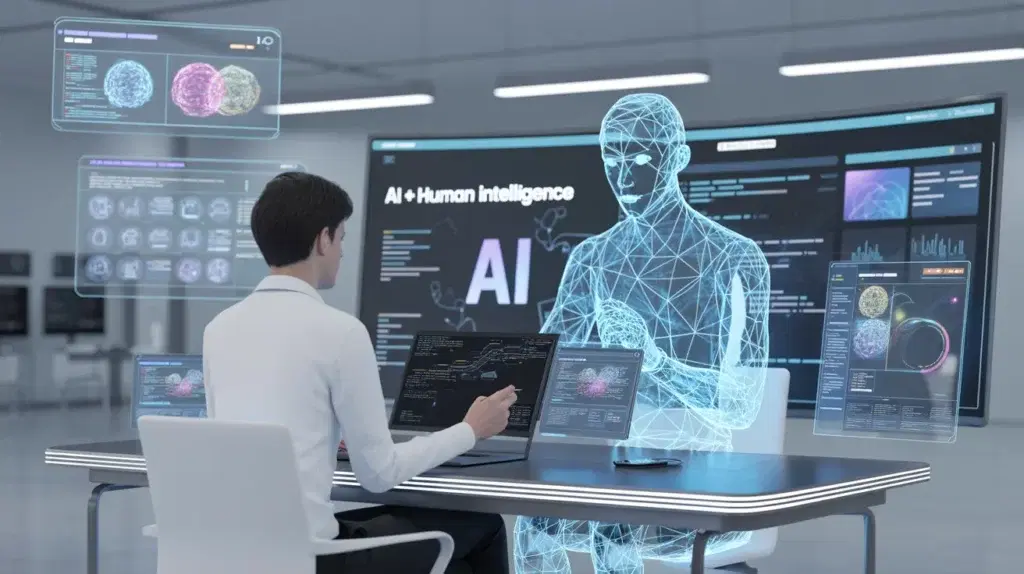
The repetitive parts – data cleaning, feature engineering, model selection, hyperparameter tuning – are being automated. And that is a good thing. It frees you to do the work that actually matters: asking the right questions, understanding the business context, interpreting results, and making recommendations.
The data scientist of 2026 is not a person who writes every line of code. They are a person who orchestrates AI tools to solve problems faster and better than ever before.
Let me explain exactly what is changing.
Step 3: The Old Way vs The New Way of Data Science
Let me contrast how data science used to be done versus how it is done in 2026.
The Old Way (2015-2023):
| Step | Time Spent | Description |
|---|---|---|
| Data collection | 1-2 days | Finding and accessing data from multiple sources |
| Data cleaning | 3-5 days | Handling missing values, removing duplicates, fixing formats |
| Exploratory analysis | 2-3 days | Making plots, calculating statistics, finding patterns |
| Feature engineering | 3-5 days | Creating new columns, transforming variables |
| Model selection | 1-2 days | Trying different algorithms, comparing results |
| Hyperparameter tuning | 2-3 days | Optimizing model settings |
| Model evaluation | 1 day | Testing on validation data |
| Deployment | 1-2 weeks | Getting model into production |
| Total | 3-5 weeks | For one model |
The New Way (2026 with AI):
| Step | Time Spent | How AI Helps |
|---|---|---|
| Data collection | 2-4 hours | AI agents connect to APIs and databases automatically |
| Data cleaning | 1-2 hours | LLMs understand context and clean intelligently |
| Exploratory analysis | 1-2 hours | AI generates insights and visualizations automatically |
| Feature engineering | 1-2 hours | AutoML suggests and creates features |
| Model selection | 30 minutes | AutoML tries dozens of models in parallel |
| Hyperparameter tuning | 30 minutes | Automated optimization |
| Model evaluation | 15 minutes | AI generates comprehensive reports |
| Deployment | 1-2 days | MLOps tools automate deployment |
| Total | 1-3 days | For multiple models |
The Key Difference:
The old way was manual, slow, and repetitive. The new way is automated, fast, and focused on higher-level thinking.
Step 4: 5 Ways AI is Transforming Data Science in 2026
Transformation 1: AutoML is Making Model Building Democratized
What AutoML Does:
AutoML (Automated Machine Learning) tools automatically try dozens of algorithms, tune hyperparameters, and select the best model for your data. You just give it clean data and a target column.
What This Means for Data Scientists:
You no longer need to spend days trying different algorithms. AutoML does it in minutes. Your value shifts from "I can tune XGBoost" to "I understand which problem requires which approach."
Examples in Practice:
-
A marketing analyst wants to predict customer churn. They upload their data to an AutoML tool. In 30 minutes, they have a working model. No ML engineering degree required.
-
A finance team wants to detect fraud. AutoML tries 20 algorithms, finds the best one, and explains why it works.
What You Still Need to Know:
You need to understand what the models are doing. You need to interpret results. You need to know when AutoML is making a mistake. The "why" matters more than the "how."
Transformation 2: LLMs are Revolutionizing Data Cleaning and Preparation
What LLMs Do for Data Cleaning:
Traditional data cleaning required writing custom code for every scenario. Handle missing values. Fix inconsistent formats. Remove duplicates. Standardize categories. This was tedious and error-prone.
LLMs understand context. You can say "clean this customer address column" and the LLM knows that "Delhi," "DL," "New Delhi," and "Dilli" all mean the same thing.
What This Means for Data Scientists:
Data cleaning used to be 60-80% of your time. Now it is 10-20%. You can focus on understanding the data rather than scrubbing it.
Examples in Practice:
-
A messy CSV with dates in 5 different formats (DD/MM/YYYY, MM/DD/YYYY, DD-MM-YY, etc.). LLM standardizes everything in seconds.
-
Customer feedback data with typos and slang. LLM normalizes text without losing meaning.
-
Product categories that are inconsistently labeled ("laptop," "Laptop," "lap top," "notebook"). LLM groups them correctly.
What You Still Need to Know:
You need to validate the results. LLMs are powerful but not perfect. You need to spot when the AI made an incorrect assumption.
Transformation 3: AI Agents are Automating End-to-End Analysis
What AI Agents Do for Analysis:
Instead of you writing code to answer each question, you give an AI agent a goal: "Analyze our sales data and tell me why Q3 revenue dropped." The agent figures out what to do. It writes SQL queries. It creates visualizations. It runs statistical tests. It produces a report.
What This Means for Data Scientists:
You move from being a coder to being an orchestrator. You define the questions. You guide the agent. You validate the findings.
Examples in Practice:
-
A product manager asks "Which features drive retention?" An AI agent analyzes user behavior data, runs cohort analysis, identifies top features, and presents findings.
-
A marketing team asks "Which channel has the best ROI?" An AI agent pulls data from Google Ads, Facebook, and email campaigns, calculates ROAS, and creates a comparison dashboard.
What You Still Need to Know:
You need to ask the right questions. You need to know which analysis is appropriate for which problem. You need to spot when the agent is on the wrong track.
Transformation 4: Natural Language is Becoming the Primary Interface
What Natural Language Interfaces Do:
Instead of writing SQL queries or Python code, you just ask questions in plain English. "Show me monthly sales by region for the last 6 months." The AI translates your question into code, runs it, and shows you the result.
What This Means for Data Scientists:
Technical skills (SQL, Python) are still important – but they are no longer the barrier to entry. Business understanding and question-asking become the differentiators.
Examples in Practice:
-
A business user asks "Which products have the highest margin?" and gets an answer without knowing SQL.
-
A data scientist uses natural language for 80% of queries and only writes custom code for the remaining 20%.
-
An executive asks a dashboard "Why did sales drop in April?" and the AI generates a hypothesis and supporting analysis.
What You Still Need to Know:
You need to know when natural language is not enough. You need to write custom code for complex transformations. You need to debug when the AI misunderstands.
Transformation 5: Real-Time and Streaming Analytics are Becoming Accessible
What AI Does for Real-Time Analytics:
Traditional data science was batch-based. You collect data for a week, build a model, deploy it, and it works for a month. The world moves faster now.
AI makes real-time analytics accessible. Models that update continuously. Anomaly detection that triggers alerts instantly. Recommendations that change as user behavior changes.
What This Means for Data Scientists:
You need to think about streaming data, not just static datasets. You need to understand model drift and retraining. You need to build systems, not just notebooks.
Examples in Practice:
-
An e-commerce site personalizes recommendations as the customer browses. Each click updates the model.
-
A fraud detection system scores every transaction in milliseconds. Suspicious activity is blocked instantly.
-
A manufacturing plant monitors sensors continuously. A model predicts machine failure 24 hours in advance.
What You Still Need to Know:
You need to understand the architecture of real-time systems. You need to know how to monitor models in production. You need to handle the complexity of streaming data.
Step 5: What This Means for Your Data Science Career
The Skills That Are Becoming Less Important:
| Skill | Why It Matters Less |
|---|---|
| Manual data cleaning | LLMs and AutoML do it faster |
| Writing every line of code | Natural language interfaces for common tasks |
| Hyperparameter tuning | AutoML automates it |
| Memorizing algorithm details | AI tools suggest appropriate algorithms |
| Building models from scratch | Pre-trained models and fine-tuning are standard |
The Skills That Are Becoming More Important:
| Skill | Why It Matters More |
|---|---|
| Asking the right questions | AI can answer, but you must ask |
| Business domain knowledge | Understanding context that AI cannot see |
| Interpreting results | AI gives answers; you provide meaning |
| Validating AI outputs | AI makes mistakes; you catch them |
| Orchestrating AI tools | AI does the work; you manage the workflow |
| Communicating insights | Storytelling with data is still human |
| Ethics and bias detection | AI amplifies biases; you must spot them |
| MLOps and deployment | Getting models to production is still hard |
The Bottom Line:
The technical gatekeeping is disappearing. You do not need to be a coding wizard to be a data scientist anymore. But you need to be a better thinker, a better question-asker, and a better communicator.
Step 6: What Coding Now Offers for Modern Data Science
At Coding Now – Gurukul of AI, our Data Science course (4 months) and AI Engineering Diploma (6 months) have been updated for 2026 to reflect how AI is transforming the field.
What You Will Learn:
| Module | Topics Covered | How AI is Integrated |
|---|---|---|
| Python Foundations | Variables, loops, functions, OOP | Using AI tools to accelerate learning |
| Data Analysis | Pandas, NumPy, Matplotlib, SQL | AI-assisted data cleaning and exploration |
| AutoML | Automated model selection and tuning | Build models without writing every line of code |
| LLMs for Data Science | Using GPT, Gemini for analysis | Natural language queries and automated reporting |
| AI Agents | Building agents that analyze data | End-to-end automated analysis |
| Traditional ML | Regression, classification, clustering | Understanding what AutoML is doing |
| Deep Learning | Neural networks, NLP, computer vision | Using pre-trained models and fine-tuning |
| MLOps | Deployment, monitoring, retraining | Getting models to production |
| Real-World Projects | 50+ industry projects | Portfolio that shows you can orchestrate AI tools |
Projects You Will Build:
-
Sales forecasting with AutoML
-
Customer churn prediction with LLM-powered insights
-
Real-time fraud detection system
-
AI agent that analyzes customer feedback
-
Automated reporting dashboard with natural language queries
Placement Support:
-
100% placement assistance
-
3,500+ hiring partners
-
3,200+ students placed
-
Average salary: ₹6-14 LPA (Data Science) | ₹8-18 LPA (AI Engineering)
-
Highest package: ₹34 LPA
Mode: Offline at Pitampura, Delhi (hybrid options available)
Duration: 4 months (Data Science) or 6 months (AI Engineering Diploma)
7-Day Trial: Attend 7 days. If you do not see value, full refund.
Limited Offer: 50% OFF on select courses. Call +91 9667708830.
Step 7: Why Delhi is a Great Hub for Modern Data Science
1. Proximity to Tech Hubs
Noida, Gurgaon, and Delhi have thousands of companies adopting modern data science. Your future employers are within 1 hour.
2. Affordable Living
PG accommodation in Pitampura costs ₹6,000-10,000 per month. Much cheaper than Bangalore or Mumbai.
3. The "Gurukul" Culture
Personal mentorship from founders Mamta Arora Uppal, Vikram Uppal, and Abhishek Kumar.
4. 24/7 Lab Access
Learn at your own pace. Code at 2 AM if that is when you are productive.
5. Hinglish Teaching
Complex concepts in simple language. That is why our non-CS students succeed.
6. Strong Alumni Network
3,200+ placed students working at top companies. They refer our current students.
Our Office Address:
2nd Floor, Kapil Vihar (Opp. Metro Pillar No.354)
Pitampura, New Delhi – 110034
Step 8: Pro Tips for Staying Relevant in the AI-Powered Data Science Era
Tip 1: Learn to Orchestrate, Not Just Code
Your value is not in writing every line of Python. It is in knowing which AI tools to use for which problem and how to combine them.
Tip 2: Deepen Your Domain Knowledge
AI can analyze data. AI cannot understand your specific business context. That is your superpower.
Tip 3: Validate Everything AI Produces
AI makes mistakes confidently. Always verify critical findings. Build validation into your workflow.
Tip 4: Learn MLOps
Building models is easy. Deploying them and keeping them working is hard. This skill is not yet automated.
Tip 5: Focus on Communication
AI can generate charts. AI cannot tell a compelling story to a CEO. Your ability to communicate insights is irreplaceable.
Tip 6: Use the 7-Day Trial
Not sure if modern data science is for you? Join our 7-day trial. If you do not see value, full refund.
Step 9: Frequently Asked Questions
Q1: Will AI replace data scientists?
No. AI will replace the repetitive parts of data science. Data scientists who learn to work with AI will be more valuable than ever.
Q2: Do I still need to learn SQL and Python?
Yes. But you will use AI tools to write most of your code. You still need to understand what the code does and debug when something goes wrong.
Q3: What is AutoML and do I need to learn it?
AutoML automates model building. Yes, you need to learn it – it is the standard tool for modern data science.
Q4: How is Coding Now's Data Science course different from others?
We teach traditional data science AND how AI is transforming it. You learn AutoML, LLMs for data science, AI agents for analysis – not just old-school methods.
Q5: What is the average salary for a data scientist in 2026?
Freshers: ₹6-10 LPA. Mid-level: ₹10-18 LPA. Senior: ₹18-30 LPA. Our highest package is ₹34 LPA.
Q6: Can I get a data science job without a CS degree?
Yes. 40% of our students are from non-CS backgrounds. Skills and projects matter more than degrees in 2026.
Q7: How long does it take to become job-ready?
-
Self-study: 8-12 months
-
With Coding Now: 4-6 months
Q8: Does Coding Now have placement for data science roles?
Yes. 100% placement support. 3,500+ hiring partners. 3,200+ students placed.
Q9: What is the 7-day trial?
Attend 7 days of classes. If you do not see value, we refund 100% of the fee.
Q10: How do I enroll?
Call +91 9667708830 or visit our Pitampura center.
Step 10: Final Tagline
"Don't Fear AI Transforming Data Science. Learn to Lead It."
Hashtags:
#DataScience #AITransformation #AutoML #LLMforData #ModernDataScience #CodingNow #GurukulOfAI #DataScienceCareer
Step 11: A Personal Note from the Founder
I remember when I first saw AutoML in action. I had spent weeks building a model. Hyperparameter tuning. Feature engineering. Cross-validation.
Then AutoML did in 30 minutes what took me 2 weeks. And the model was better.
I felt a moment of panic. Was my skill obsolete?
Then I realized something. The AutoML tool did not know which problem to solve. It did not understand the business context. It did not know which features actually made sense. It could not explain the results to a non-technical stakeholder.
Those things were still my job. They always will be.
AI is not taking your job. It is taking the boring parts of your job. That is a gift.
Embrace it. Learn it. Lead it.
And if you want a mentor, a community, and a lab – we are here.
Come visit us in Pitampura. Take a free demo class. See how we teach modern data science.
Your AI-transformed data science career starts now.
Contact Us
Phone: +91 9667708830
Email: info@codingnow.in
Website: https://codingnow.in/
Address:
2nd Floor, Kapil Vihar (Opp. Metro Pillar No.354)
Pitampura, New Delhi – 110034
Backlink to main website: Explore Data Science and AI Engineering courses at Coding Now – Gurukul of AI
