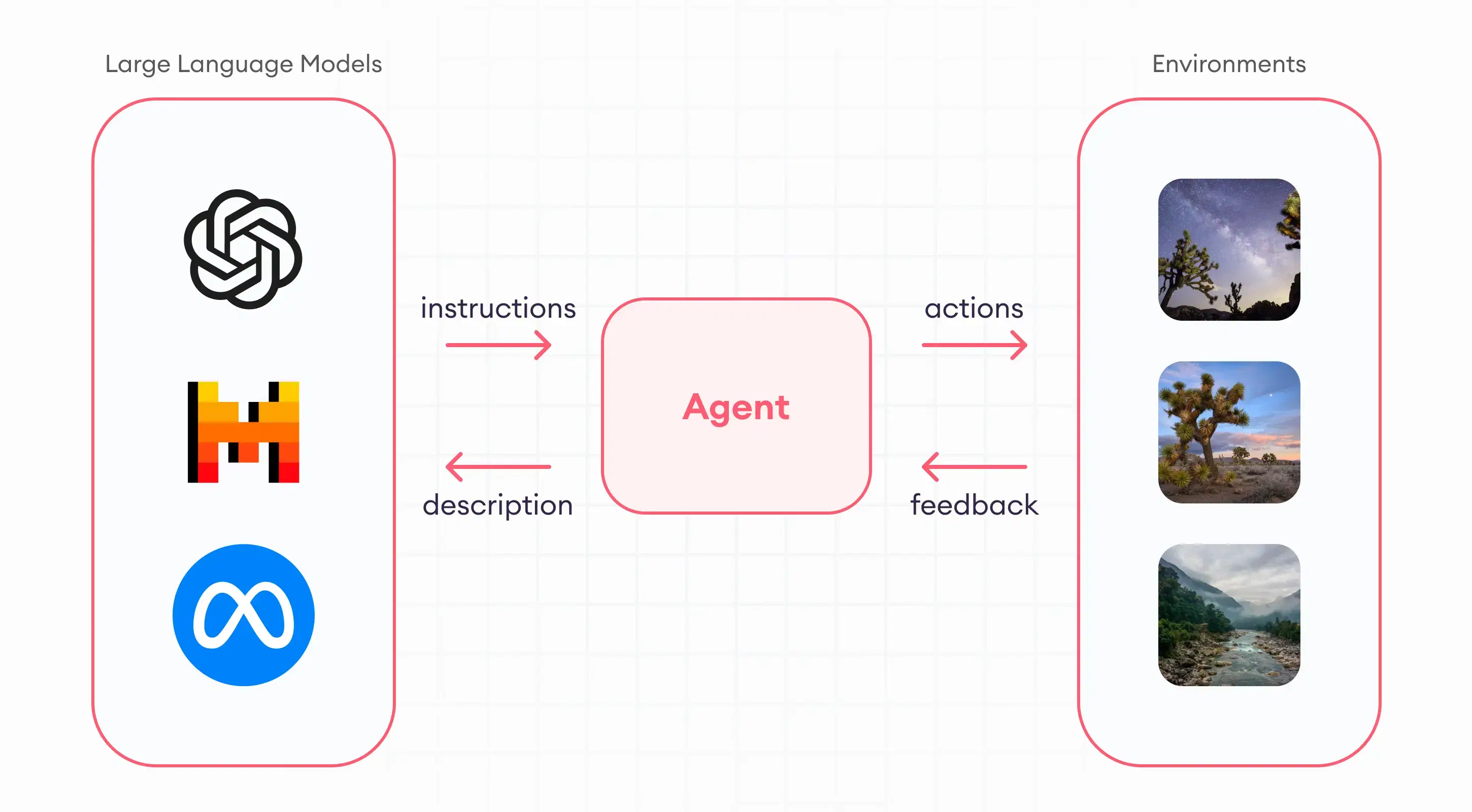
From LLMs to Agents: The 2026 Generative AI Roadmap
The Evolution: Why Agents Are the Next Big Thing
In 2023, everyone was talking about ChatGPT. In 2024, it was about fine-tuning LLMs. In 2025, Retrieval-Augmented Generation (RAG) dominated the conversation. But 2026 is the year of Agentic AI—transforming Generative AI from a chatbot into autonomous systems capable of performing real-world tasks.
The shift is simple:
LLMs generate content. Agents take action.
Agents can plan, reason, execute tasks, use tools, remember context, and adapt dynamically. This roadmap will take you from understanding foundational Large Language Models (LLMs) to building sophisticated multi-agent systems that companies are actively hiring for.
Step-by-Step Roadmap: From LLMs to Agents
Phase 1: LLM Fundamentals (Month 1–2)
Before building AI agents, you need to understand the models that power them.
What to Learn
How LLMs Work
-
Transformer Architecture
-
Attention Mechanism
-
Tokenization
-
Embeddings
Popular Models
-
GPT-4
-
Claude 3.5
-
Gemini
-
Llama 3
-
Mistral
Prompt Engineering
-
System Prompts
-
Few-Shot Learning
-
Chain-of-Thought Prompting
-
Tree-of-Thought Prompting
Embeddings & Vector Search
-
Semantic Search
-
Similarity Metrics
-
Vector Representations
LLM APIs
-
OpenAI API
-
Anthropic API
-
Google Gemini API
-
Groq API
-
Together AI
Project
Build an intelligent chatbot with custom prompts, memory, and contextual responses.
Phase 2: RAG & Knowledge Integration (Month 3)
Large Language Models are limited to their training data. RAG connects them with your private knowledge sources.
What to Learn
RAG Architecture
-
Data Ingestion
-
Chunking
-
Embeddings
-
Retrieval
-
Response Generation
Vector Databases
-
Chroma
-
Pinecone
-
Weaviate
-
Milvus
-
Qdrant
Advanced RAG
-
Hybrid Search
-
Multi-Query Retrieval
-
Re-Ranking
GraphRAG
-
Knowledge Graphs
-
Contextual Reasoning
RAG Evaluation
-
Faithfulness
-
Relevance
-
Retrieval Metrics
Project
Build a Document Question Answering System capable of answering questions from PDFs, websites, and databases.
Phase 3: LLM Fine-Tuning & Customization (Month 4)
Sometimes retrieval isn't enough. Businesses need AI models tailored to their domain.
What to Learn
Fine-Tuning Techniques
-
LoRA
-
QLoRA
-
PEFT
-
Full Fine-Tuning
Instruction Tuning
-
Dataset Creation
-
Domain-Specific Training
RLHF & DPO
-
Reinforcement Learning from Human Feedback
-
Direct Preference Optimization
Distillation
-
Model Compression
-
Faster Inference
Evaluation
-
Model Benchmarking
-
Hallucination Detection
-
Performance Metrics
Project
Fine-tune an open-source model such as Llama 3 or Mistral for Legal or Medical Question Answering.
Phase 4: Agentic AI Foundations (Month 5)
Now you're ready to move beyond chatbots and build intelligent agents.
What to Learn
Agent Architecture
-
LLM Brain
-
Tools
-
Memory
-
Planning Modules
Reasoning Frameworks
-
ReAct Pattern
-
Reflexion Framework
Tool Usage
-
Function Calling
-
API Integration
-
Code Execution
Memory Systems
-
Short-Term Memory
-
Long-Term Memory
-
Episodic Memory
Planning Strategies
-
Chain-of-Thought
-
Tree-of-Thought
-
Plan-and-Solve
Key Frameworks
-
LangChain
-
LangGraph
-
CrewAI
-
AutoGen
-
LlamaIndex
Project
Build a Research Agent that browses the web, reads articles, extracts information, and generates reports.
Phase 5: Multi-Agent Systems & Orchestration (Month 6)
This is where Generative AI becomes truly powerful.
Multiple agents collaborate like a virtual team to solve complex tasks.
What to Learn
Multi-Agent Collaboration
-
Research Agent
-
Writer Agent
-
Critic Agent
-
Reviewer Agent
Orchestration Patterns
-
Sequential Workflows
-
Parallel Execution
-
Hierarchical Systems
-
Round-Robin Communication
Communication Systems
-
Inter-Agent Messaging
-
State Management
Human-in-the-Loop
-
Approval Systems
-
Feedback Mechanisms
-
Escalation Workflows
AgentOps
-
Monitoring
-
Logging
-
Debugging
-
Evaluation
Advanced Topics
-
Browser Agents
-
Autonomous Web Navigation
-
Code Generation Agents
-
Business Process Automation
Project
Build a Complete AI Content Agency:
-
Agent 1 → Research
-
Agent 2 → Write
-
Agent 3 → Edit
-
Agent 4 → Publish
Phase 6: Production Deployment (Ongoing)
Building AI systems is one thing. Deploying them at scale is what makes you industry-ready.
What to Learn
Model Serving
-
vLLM
-
TGI
-
Ollama
-
Together AI
Deployment Platforms
-
AWS
-
Google Cloud Platform
-
Microsoft Azure
-
Render
-
Vercel
Monitoring
-
LangSmith
-
Arize
-
WhyLabs
Security
-
Prompt Injection Prevention
-
Guardrails
-
Rate Limiting
-
Authentication
Cost Optimization
-
Caching
-
Model Routing
-
Token Optimization
Project
Deploy a production-ready multi-agent system with monitoring, logging, and security guardrails.
Skills Comparison: LLM Developer vs Agentic AI Engineer
| Skill Area | LLM Developer | Agentic AI Engineer |
|---|---|---|
| Prompt Engineering | Essential | Advanced |
| RAG | Essential | Essential |
| Fine-Tuning | Nice to Have | Essential |
| Tool Calling | Basic | Advanced |
| Memory Systems | Not Required | Critical |
| Multi-Agent Systems | Not Required | Expert |
| AgentOps | Not Required | Critical |
Technology Stack for 2026
| Layer | Technologies |
|---|---|
| LLMs | GPT-4, Claude 3.5, Gemini, Llama 3, Mistral |
| Frameworks | LangChain, LangGraph, CrewAI, AutoGen, LlamaIndex |
| Vector Databases | Pinecone, Chroma, Weaviate, Milvus |
| Fine-Tuning | Unsloth, Axolotl, Hugging Face PEFT |
| Serving | vLLM, Ollama, TGI, Together AI |
| Evaluation | RAGAS, LangSmith, DeepEval |
| Monitoring | LangSmith, Arize, WhyLabs |
| Security | Prompt Guard, Rebuff, NeMo Guardrails |
Career Opportunities & Average Salary in India
| Role | Average Salary |
|---|---|
| LLM Engineer | ₹12–20 LPA |
| RAG Specialist | ₹15–25 LPA |
| Agentic AI Engineer | ₹20–35 LPA |
| AI Product Developer | ₹16–25 LPA |
| AI Researcher | ₹25–40 LPA |
Professionals with Agentic AI skills currently command a 30–50% salary premium over traditional Generative AI roles.
Top Use Cases of Agentic AI in 2026
Customer Support Automation
Agents that research, escalate, and resolve support tickets.
Content Production
Research → Write → Edit → Publish workflows.
Data Analysis
Agents that analyze data, generate insights, and create visualizations.
Software Development
Code generation, testing, debugging, and documentation.
Business Operations
Email drafting, meeting scheduling, and report generation.
Research & Discovery
Literature review, hypothesis generation, and experiment design.
Frequently Asked Questions
What is the difference between RAG and Agentic AI?
RAG retrieves relevant information and passes it to an LLM for response generation.
Agentic AI goes much further—it can plan tasks, select tools, remember context, and adapt dynamically to achieve goals.
Do I need Machine Learning before Generative AI?
Yes. Understanding Machine Learning fundamentals such as model training, evaluation, and overfitting provides the foundation needed to understand Generative AI systems.
How long does it take to learn Agentic AI?
If you already understand LLMs and RAG, you can become proficient in Agentic AI within 2–3 months.
From scratch, expect approximately 6–8 months of dedicated learning and practical projects.
Is Agentic AI replacing LLM Engineers?
No.
Agentic AI is built on top of Large Language Models. The future belongs to engineers who understand both LLMs and autonomous agents.
Which framework should I learn first?
Start with LangChain because of its mature ecosystem. Then explore LangGraph for workflow orchestration and CrewAI for multi-agent systems.
Ready to Master Agentic AI and Build the Future?
Join Coding Now – Gurukul of AI and become industry-ready through:
-
Hands-on Projects
-
Live Mentorship
-
Real-World AI Applications
-
Internship Opportunities
-
Placement Assistance
Enroll Now — Free Demo Available
Related Articles
-
Generative AI Roadmap: What to Learn in 2026
-
Top 10 Skills Every AI Engineer Must Learn in 2026
-
How to Start Your Career in Artificial Intelligence After College
-
Python + AI: Why This Combination is Future-Proof
India's Premier AI & Full Stack Training Institute
📍 2nd Floor, Kapil Vihar, Opp. Metro Pillar No. 354, Pitampura, New Delhi – 110034
📞 +91 7464099059
✉️ info@codingnow.in
🕐 Mon – Sat: 9:00 AM – 7:00 PM
© 2026 Coding Now – Gurukul of AI. All Rights Reserved.
